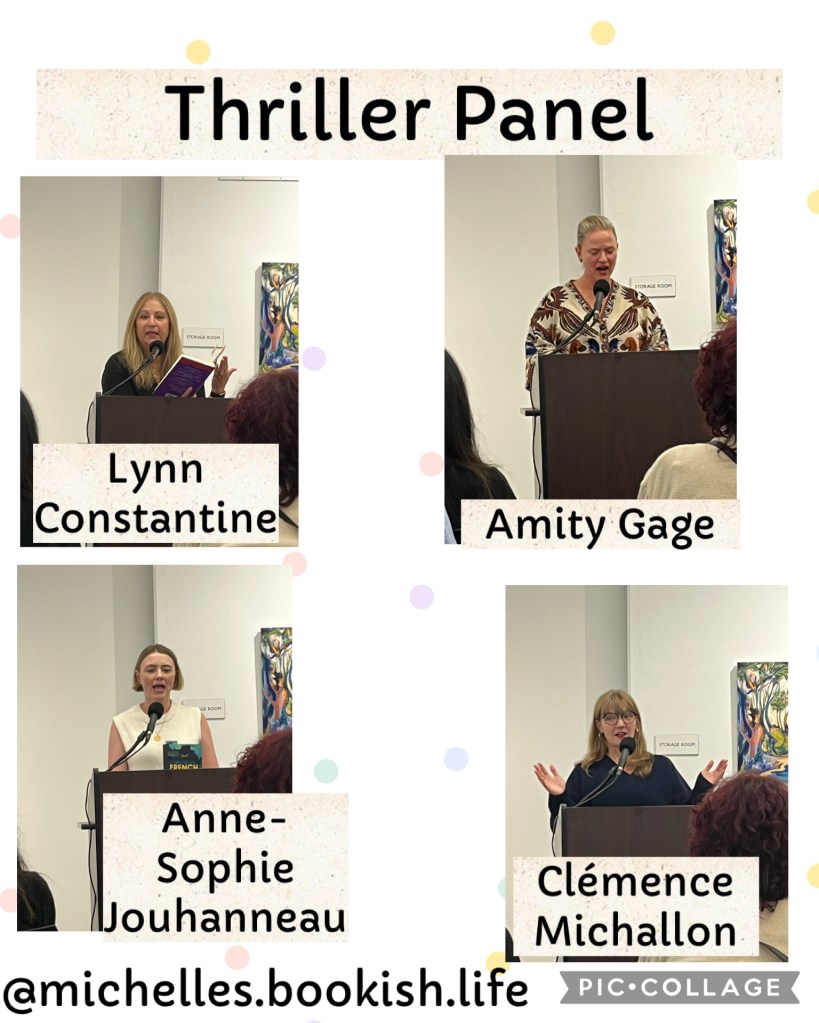
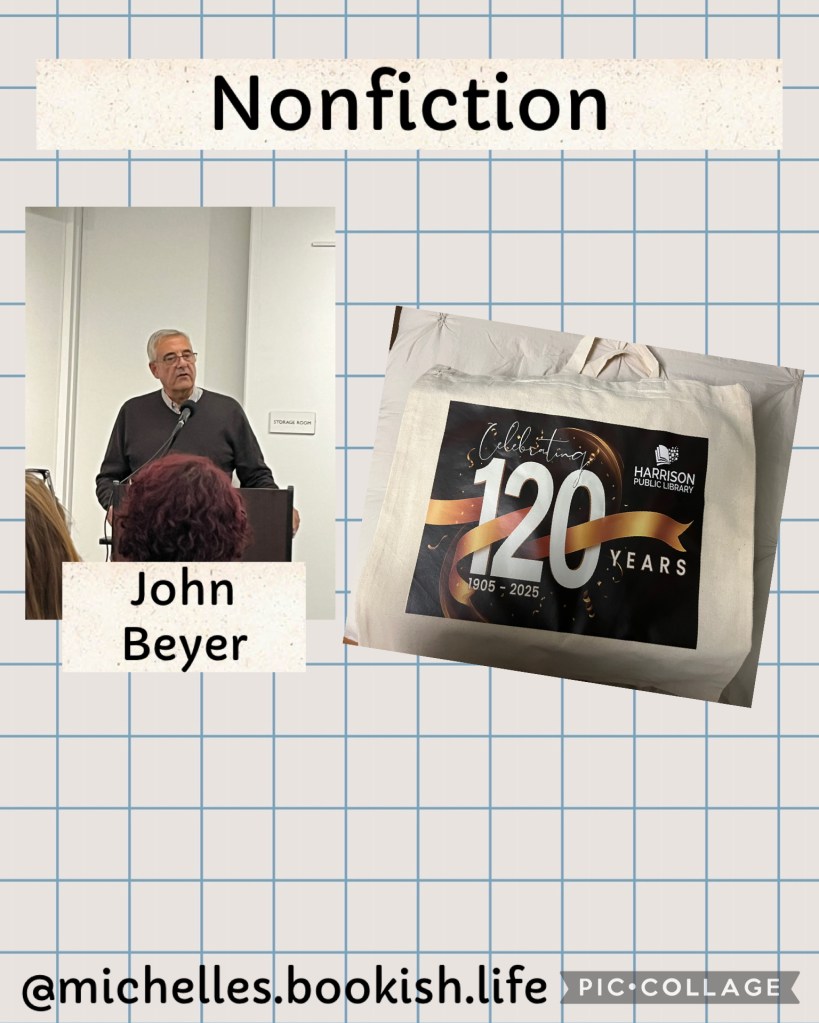
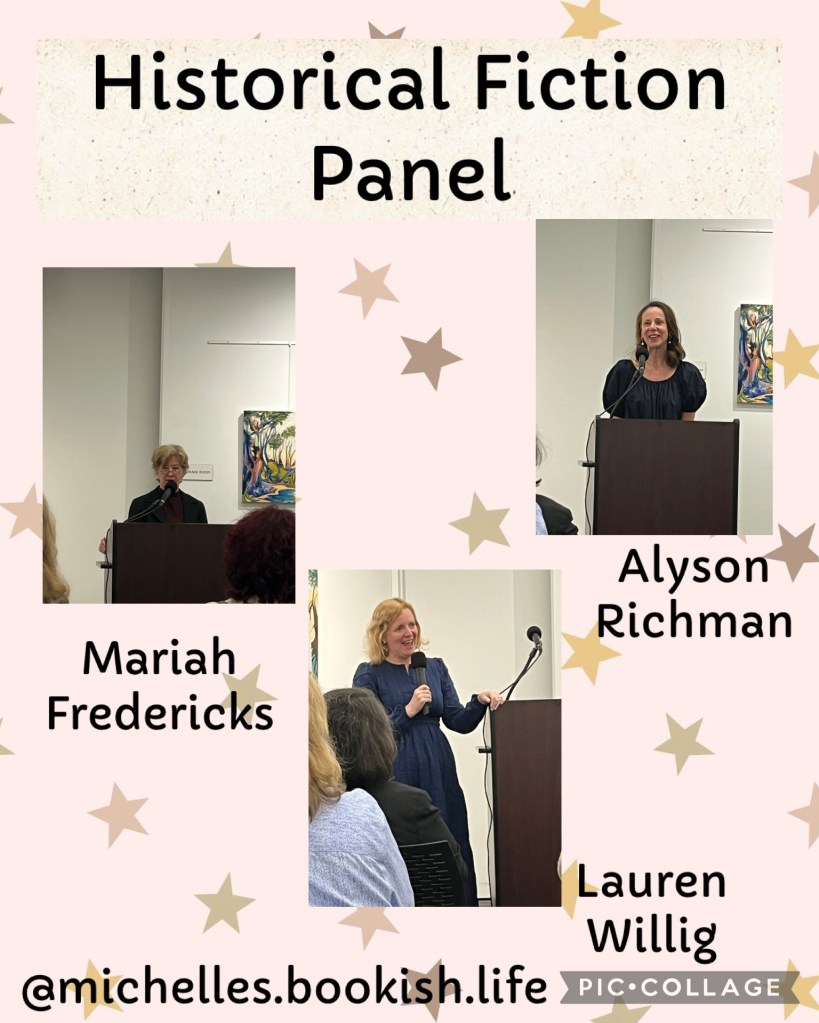
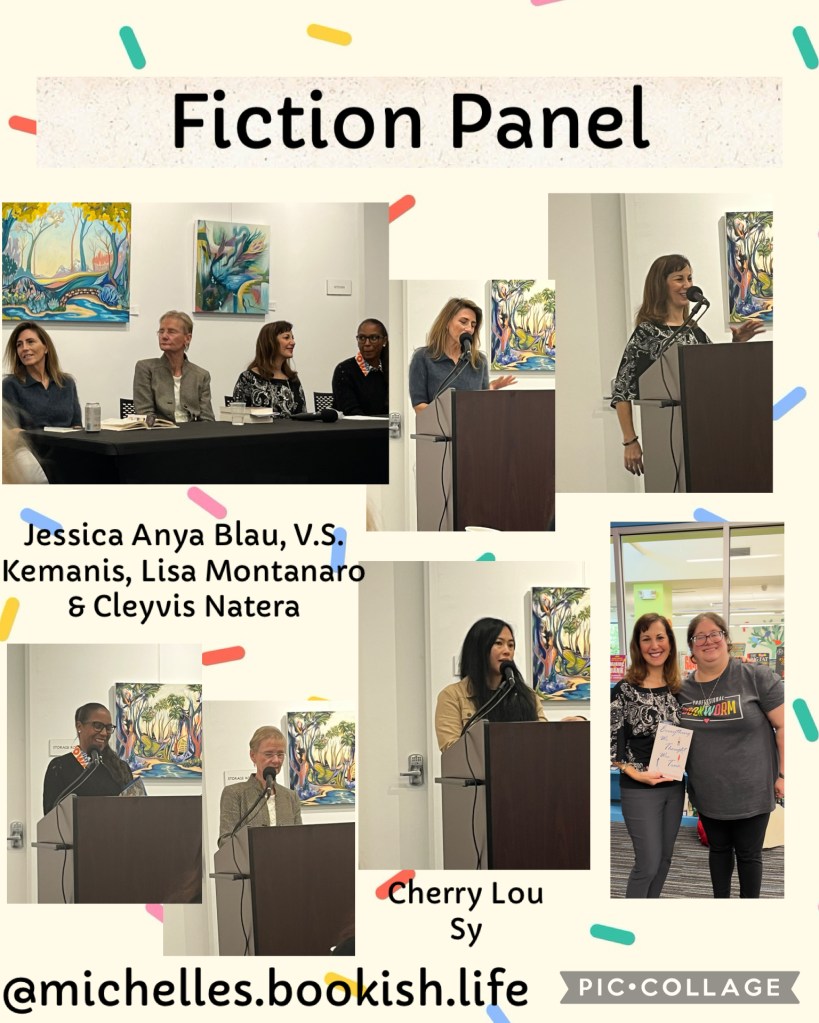
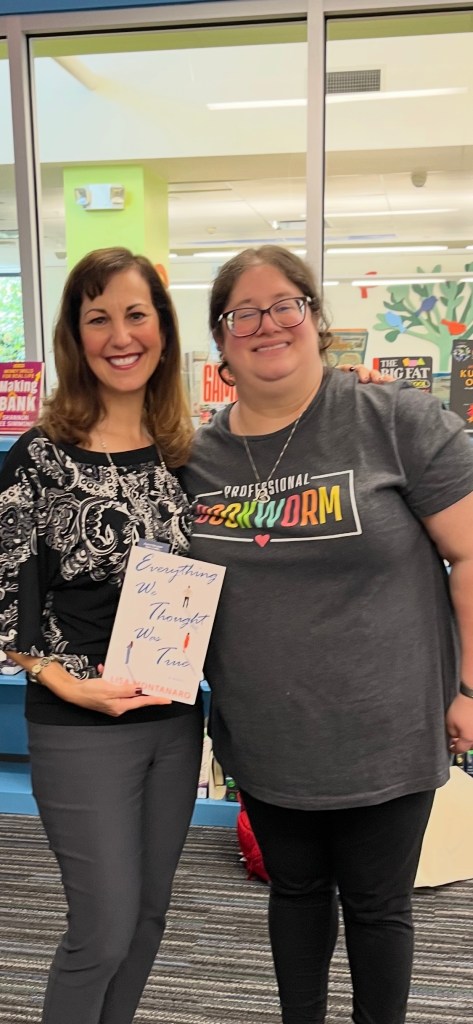
I went to Author Day at Harrison Library and it was awesome! I got to reconnect with one of my favorite author friends, Lisa Montanaro after having been to her book signing in May for her debut novel Everything We Thought Was True, meet a fellow bookstagrammer, Jen (@electric_bookaloo) and catch up with an old friend. I even won a raffle!
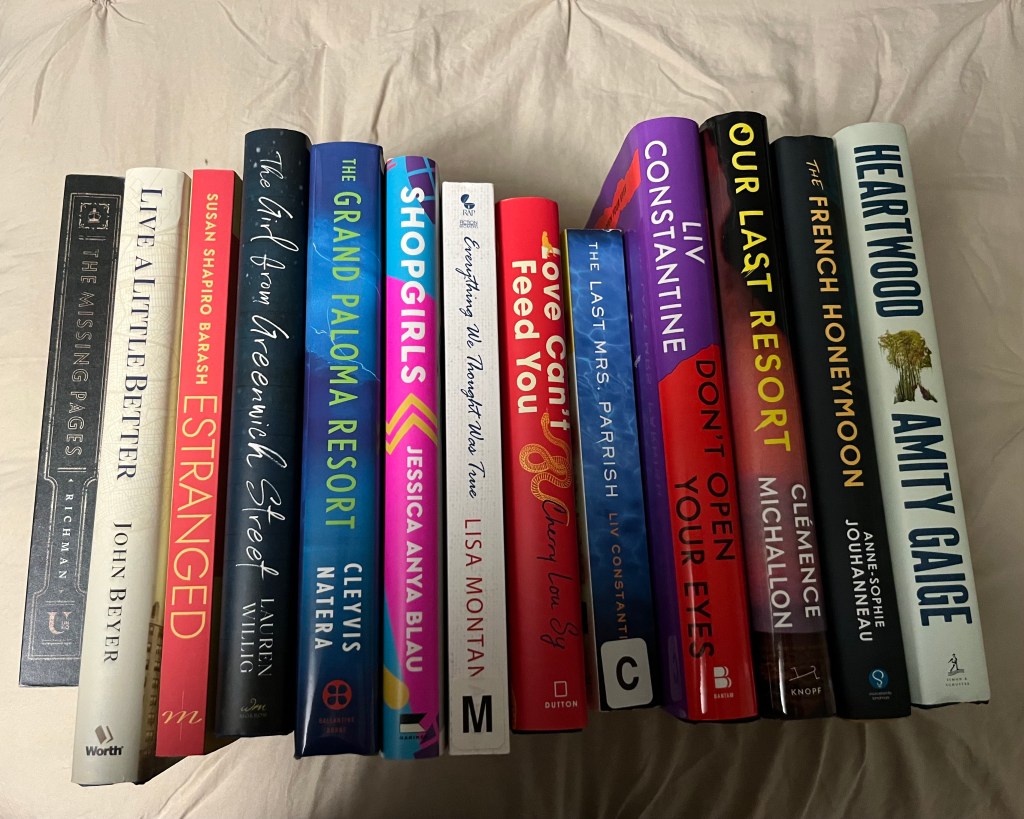
BOOKS & AUTHORS PICTURED Jessica Anya Blau – Shopgirls V.S. Kemanis Lisa Montanaro – Everything We Thought Was True Cleyvis Natera – The Grand Paloma Resort Cherry Lou Sy – Love Can’t Feed You Liv Constantine – Don’t Open Your Eyes Amity Gage – Heartwood Anne-Sophie Jouhanneau – The French Honeymoon Clémence Michallon – Our Last Resort Mariah Fredericks Alyson Richman – The Missing Pages Lauren Willig – The Girl From Greenwich Street John Beyer – Live A Little Better Susan Shapiro Barash – Estranged (author not pictured)
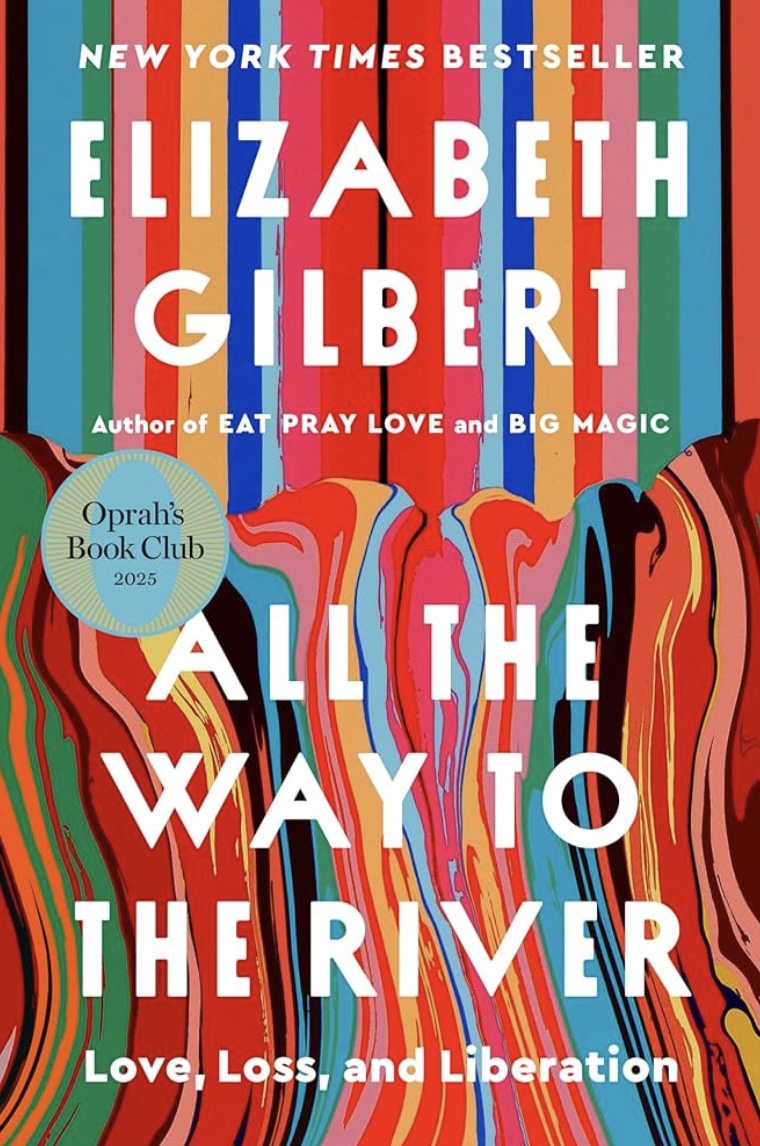
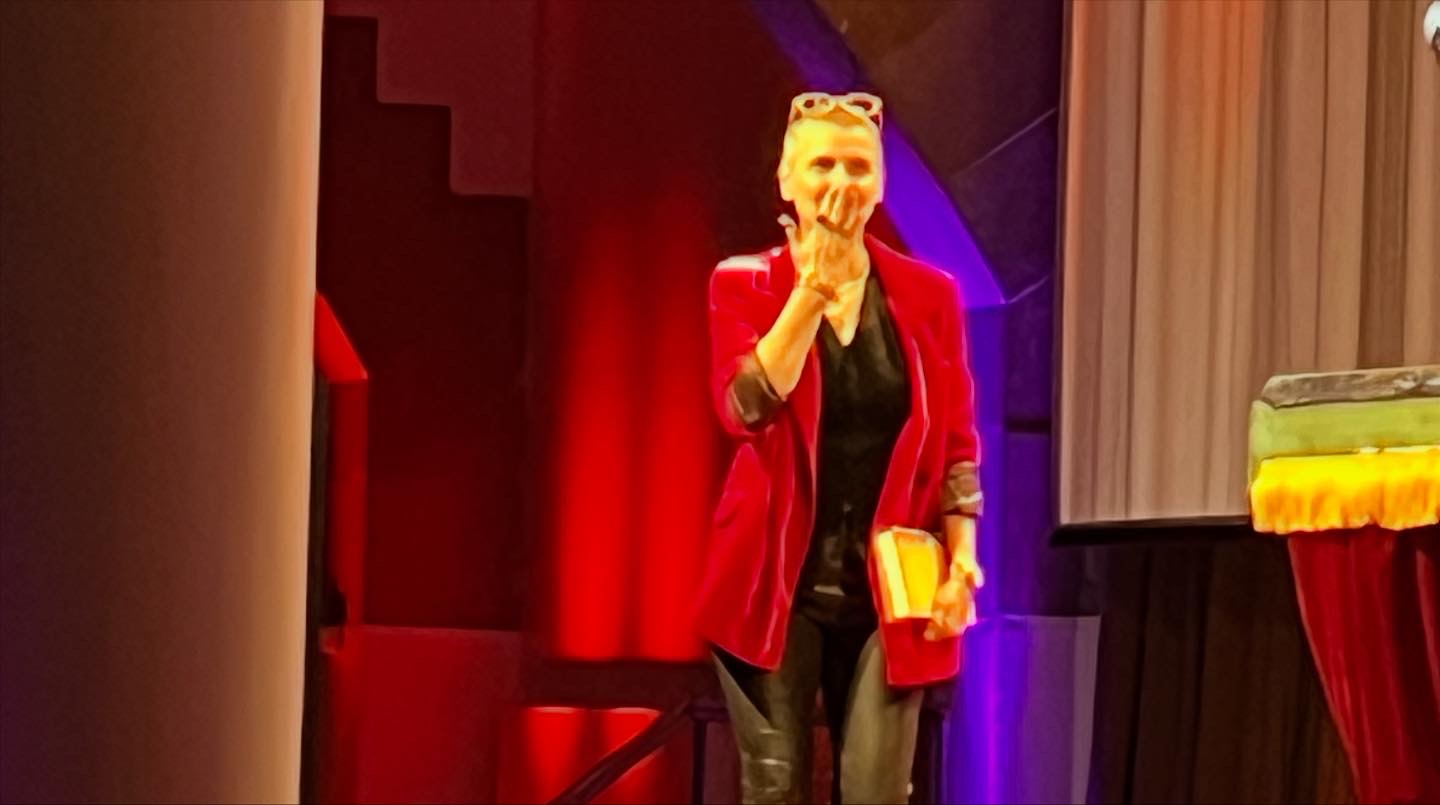
I was lucky enough to see Elizabeth (Liz) Gilbert on her very first stop on her book tour for her new memoir, All the Way to the River. I was also lucky enough to have read the book on Netgalley before the talk as well. The book signing/talk took place at Cooper Union in New York City, which was a much bigger venue than the Strand’s Rare Book Room, where they usually hold their events.
I traveled down to the City alone, and met three other women who were also attending the talk who I sat near. The books were already signed by Liz and there were so many people there, so none of the books were personalized. She basically talked the whole time, and then took questions from the audience who lined up behind a microphone.
I am so happy that I was able to see Elizabeth Gilbert do her talk. The book is about her relationship with her best friend turned lover, Rayya Elias, and their codependent relationship with each other, their drug and love addictions, as well as Rayya’s ultimate death due to pancreatic and liver cancer. It wasn’t an easy read, but definitely worth it, I think, and a very important addition to Gilbert’s story.
I haven’t read all of her books (yet) but I plan on being an Elizabeth Gilbert completest (meaning will read all her works, eventually).
I read 10 books in July. I’m looking forward to another great reading month in August.
My favorite books read in July were: Girls Like Girls by Hayley Kiyoko, When We Go Missing by April Henry and The Bright Years by Sarah Damoff.
These are all the books I read in July:
📖 Girls Like Girls by Hayley Kiyoko 📖 When We Go Missing by April Henry 📖 25 Alive by James Patterson 📖 With A Vengeance by Riley Sager 📖 The Murder Game by Carrie Doyle 📖 The Body Keeps the Score by Bessel Van Der Kolk 📖 Show Me Where the Hurt Is by Hayden Casey 📖 The Bright Years by Sarah Damoff 📖 Easy Crafts For the Insane: A Mostly Funny Memoir of Mental Illness & Making Things by Kelly Williams Brown 📖 Don’t Open Your Eyes by Liv Constantine
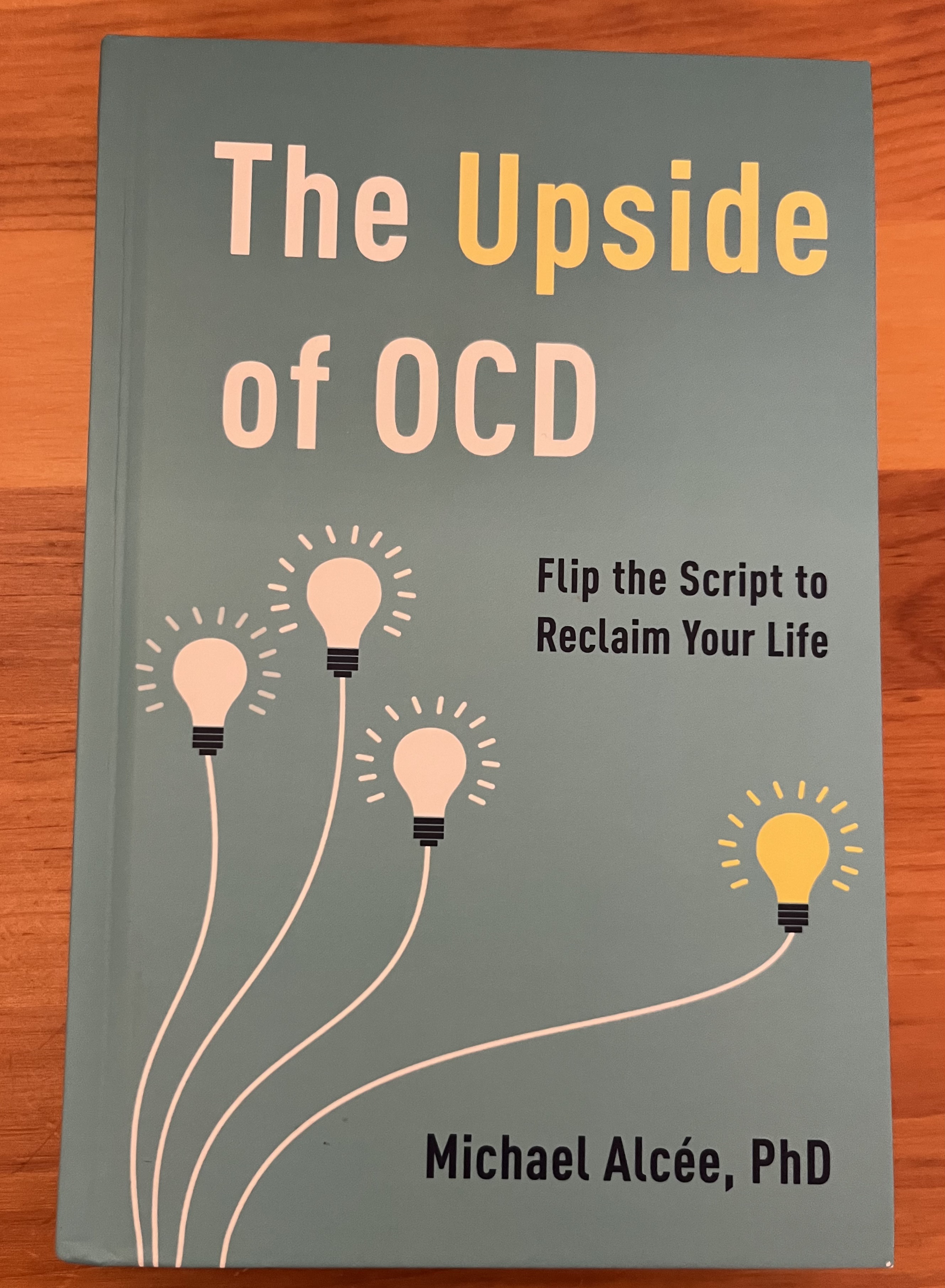
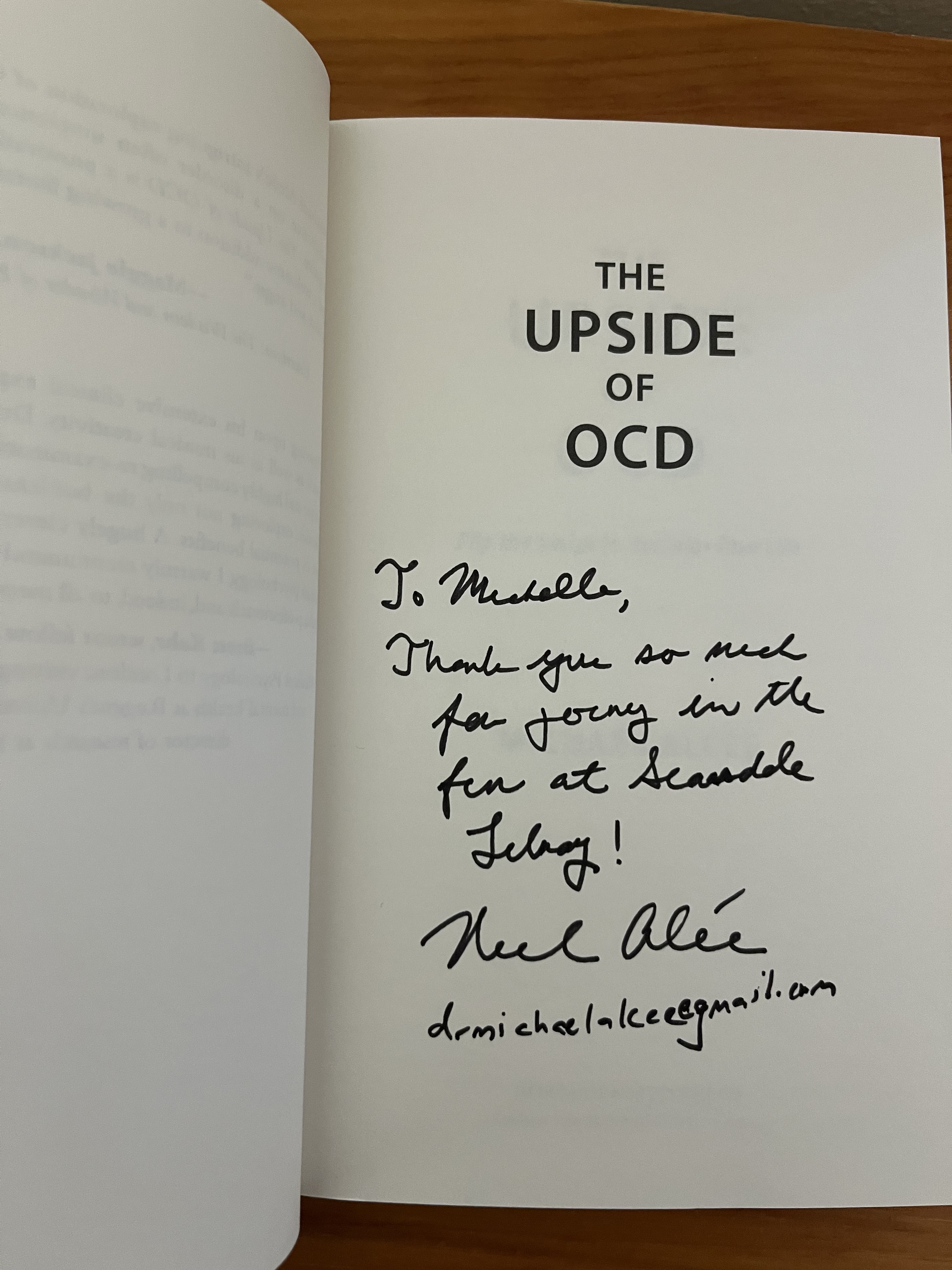
I attended an author talk and signing at the library with author Michael Alcée, a clinical psychologist and mental health educator who wrote the book The Upside of OCD: Flip the Script to Reclaim Your Life. What drew me to the talk is that I actually have OCD, as do people I love. That was the case for most people in the small group who came to the talk.
It was great to hear the good things about OCD, and the positive qualities people with OCD have, but also a bit about how to heal the bad parts. I resonated with a lot of what was said, and I can’t wait to read the book.
First, Michael talked about the famous people who have or had OCD:
Charles Darwin, naturalist/geologist Camila Cabello, singer Howie Mandel, comedian/actor John Green, young adult author Mara Wilson, child actor
People with OCD are:
Kind and empathetic. People with OCD have a lot of emotional sensitivity, and it’s said that they have hearts that are 10 times too big. They’re very concerned about others and they’re too hard on themselves. They’re also very intuitive.
They’re extremely imaginitive and they have creative minds. They have “what if” thoughts (negtive) but also “why not” thoughts (positive).
Freud says that people with OCD have a conflict with their id: they’re scared of self interest because it feels selfish.
Also, there’s a genetic part to OCD – a nature part, as well as a nurture part. People with OCD are existentially aware; death and loss is very prominent in their minds.
Michael says that OCD “does your dirty work.” In other words, it manages your boundaries. He gave the example of a woman and a man at work. The man gently shoved the woman, and then she obsessed over it, instead of just telling him that it had bothered her that he’d done that, that she hadn’t liked that. To her, it felt too aggressive to bring it up to him, so she kept it to herself.
Michael mentions that people with OCD should, but rarely do, give themselves as much empathy as they give to others. According to Michael, “you can only be selfless for so long before you start to take up space.”
I thought Michael’s talk was incredibly eye-opening and informative, and I am very much looking forward to reading the book! As always, when my review of the book is up, I’ll link it here.
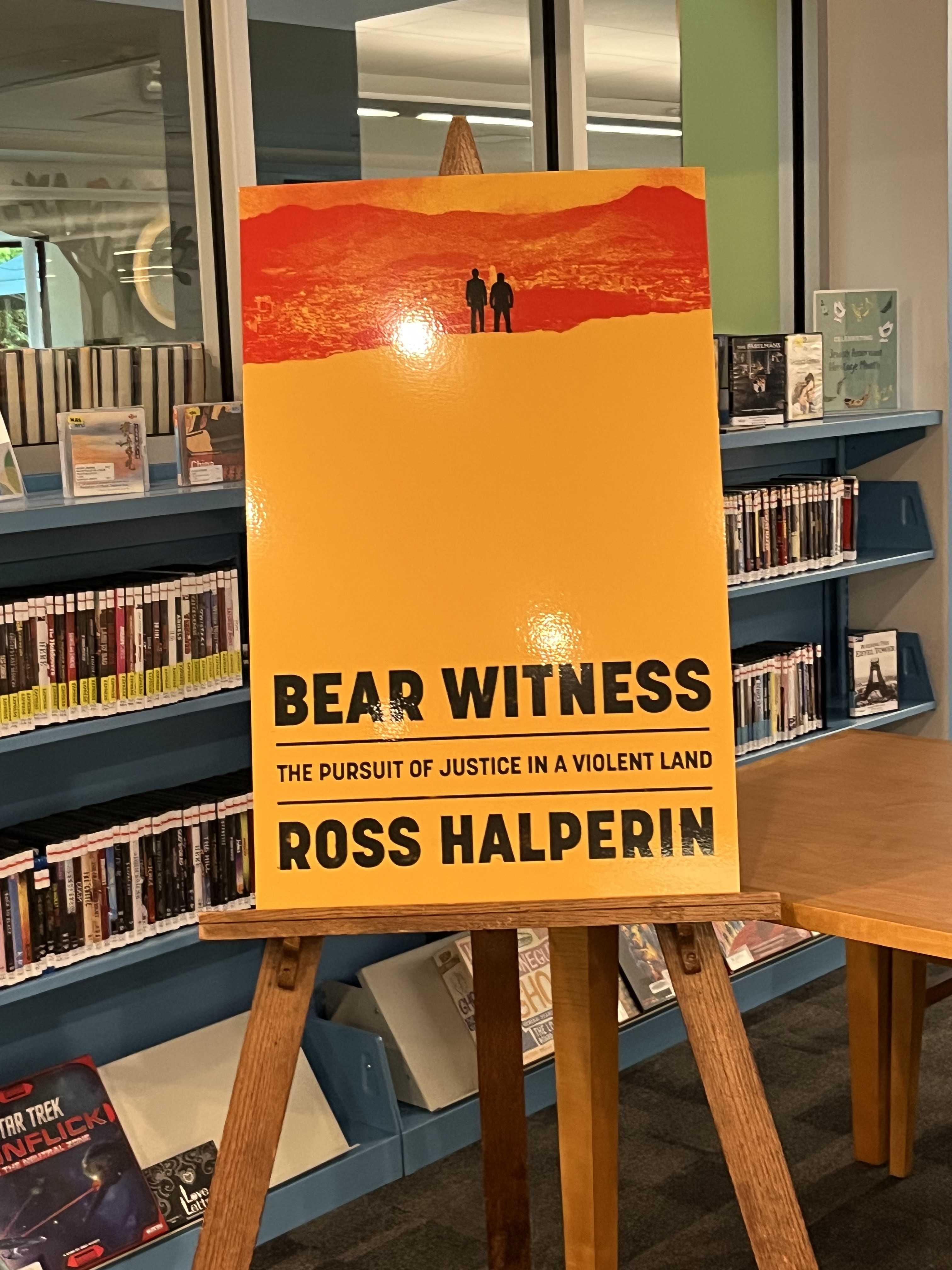
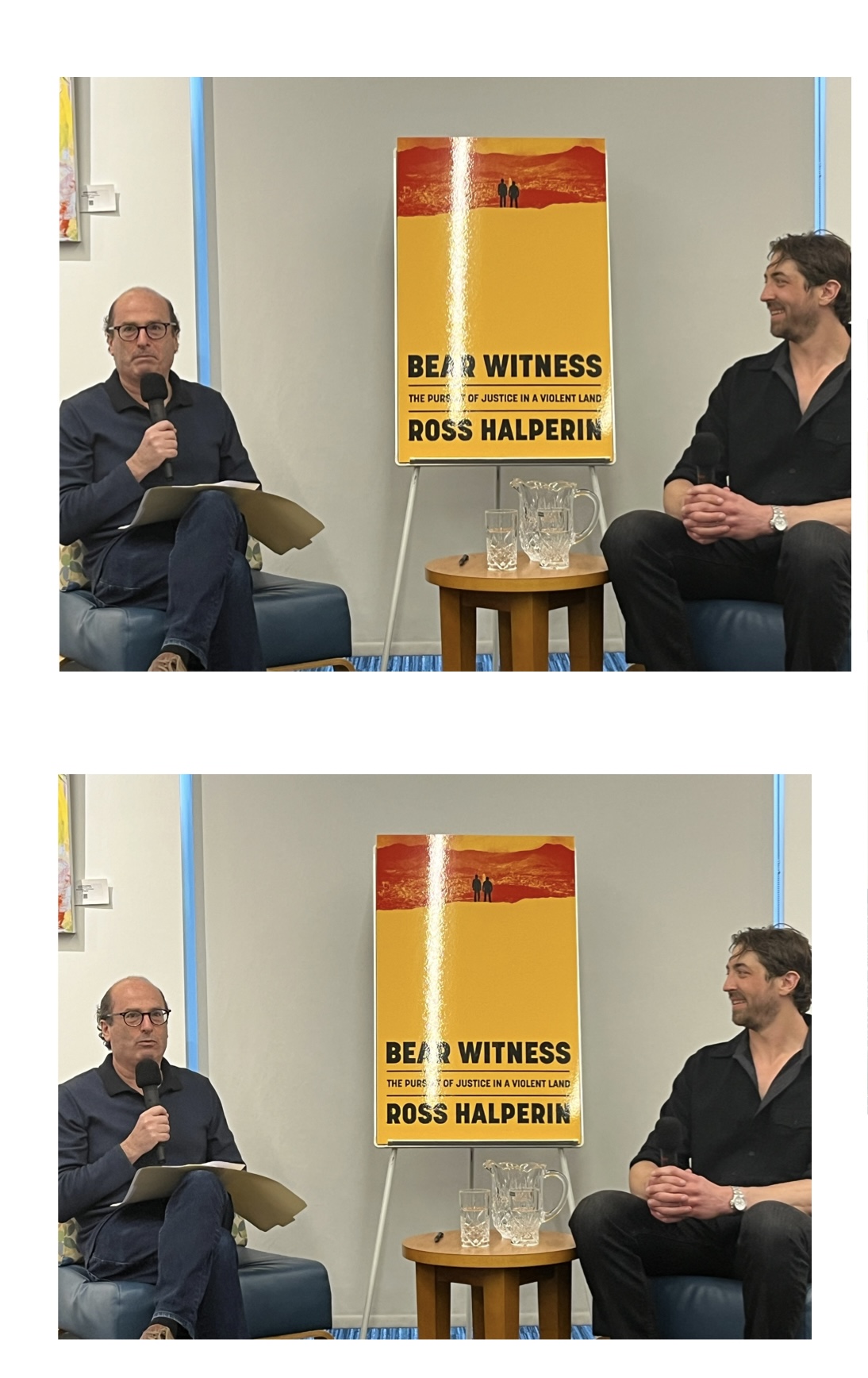
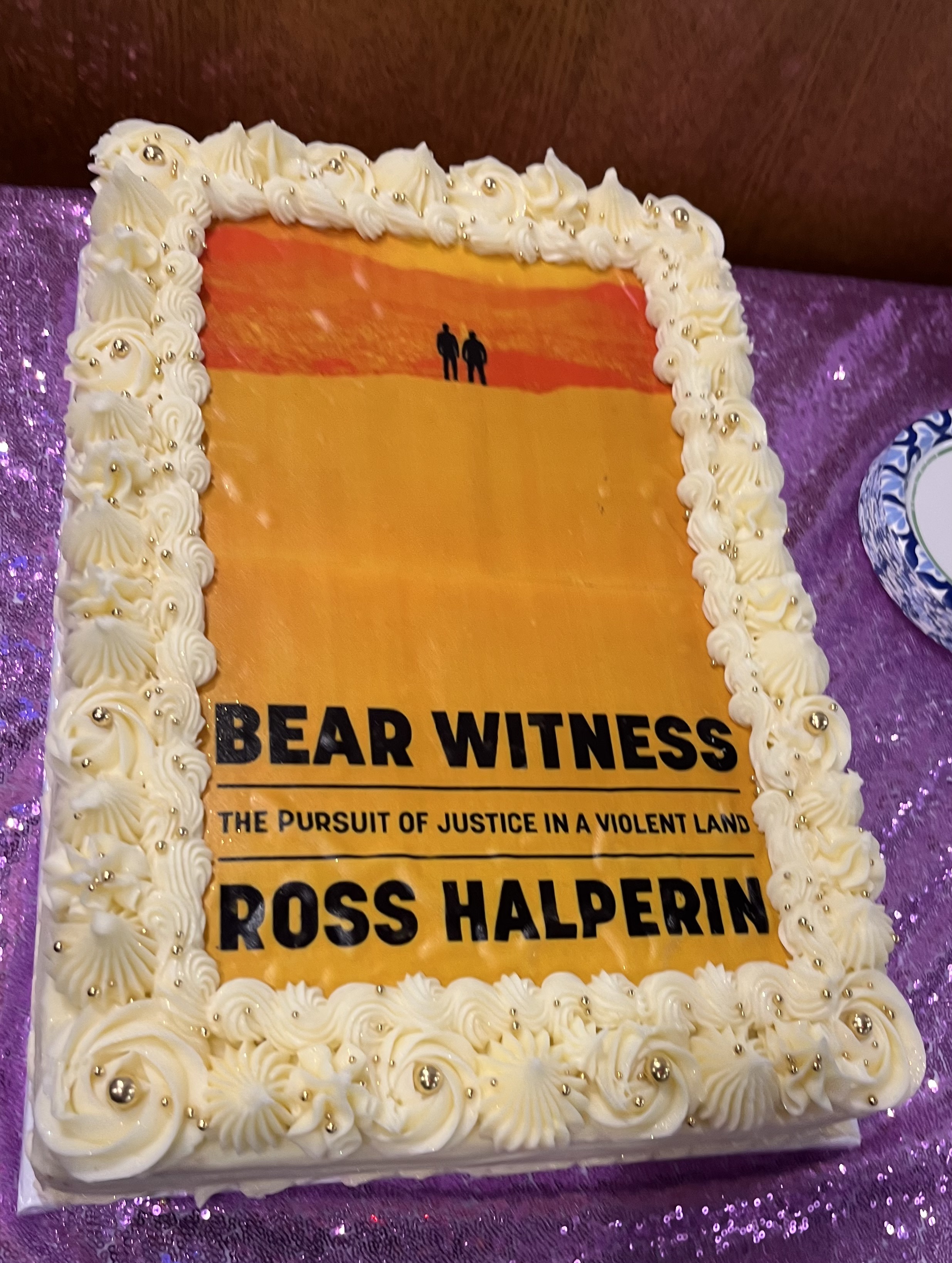
I went to a fantastic author event where author David Grann (who wrote Killers of the Flower Moon and The Wager) interviewed journalist Ross Halperin about his new true crime book Bear Witness: A Crusade for Justice in a Violent Land.
Ross is the son of Richard E. Halperin, a man who a local library building is named after, so it was pretty special to welcome Ross to the library for this event. The library had a restaurant come in and serve arepas with pork as well as drinks for purchase. They also had an awesome red velvet cake at the end which had a photo of the book cover on it. It was a very fancy after-hours event!
Bear Witness took Ross years to write and countless hours of research and interviews and cold calls, including the one he made to David Grann. The book is about two Christians, Kurt Van der Beek, an American sociologist, and Carlos Hernandez, a Honduran schoolteacher, who raised their families in Nueva Suyapa, a gang-run barrio in the mountains of Honduras. Kurt and Carlos were best friends who dedicated their lives to helping the poor and took matters into their own hands when it came to fighting back against the violence and injustice brought on by gang activity.
I have not yet read Halperin’s account of the events that unfolded, but I anxiously await the chance to do so.
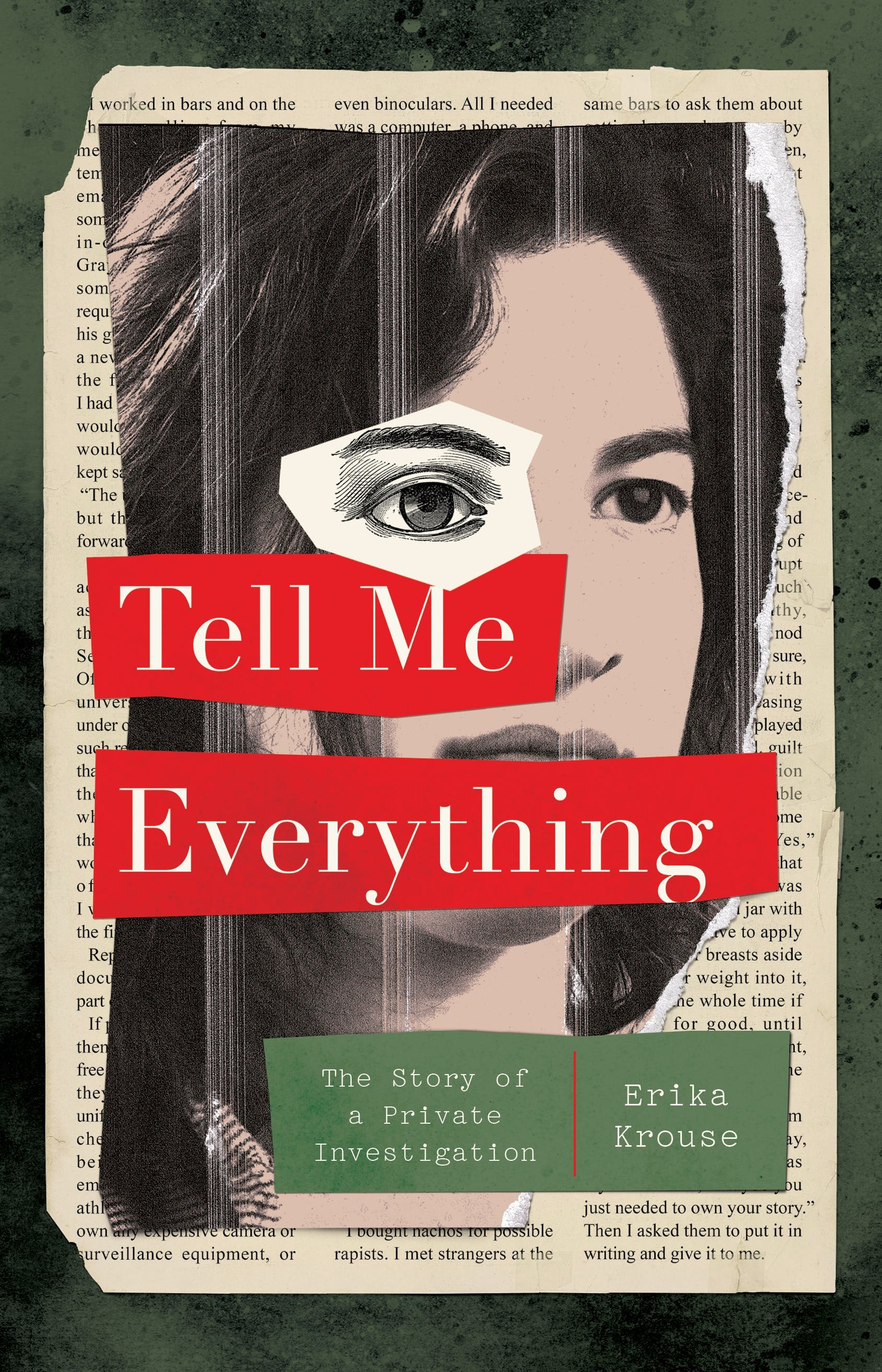
This book is part memoir and part true crime, and hooked me right from the beginning. Krouse has one of those faces; the kind of face that makes people – complete strangers – come right out and tell her their darkest secrets. She has no idea why, and doesn’t know what to do about it, until the day she meets Grayson, a lawyer who also tells her a secret…and then asks her to work for him as a private investigator. Her first case is a big one, and she’s determined to crack it wide open.
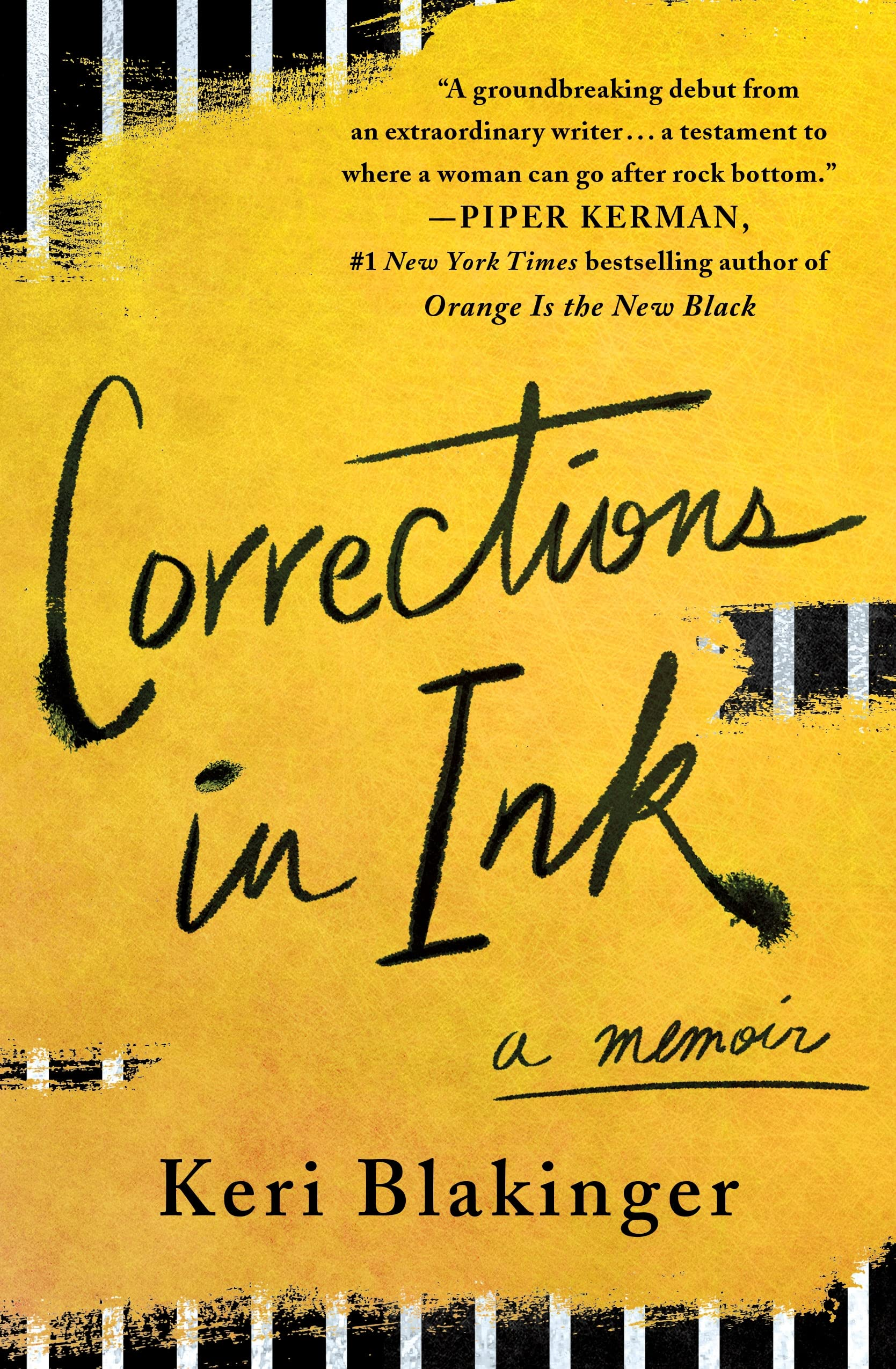
Perfect for fans of Orange Is the New Black (the book or the show), Corrections In Ink is Blakinger’s memoir about her experience as a competitive figure skater and her time in prison. Once she stopped skating, she got into all kinds of trouble, and finally got arrested by the cops for it, ultimately spending time behind bars for two years. Upon her release, Blakinger became a reporter and dedicated her career to exposing the flaws in our prison system.
Remember is a nonfiction book by neuroscientist and author Lisa Genova about memories and the brain. She discusses how the brains of people with Alzheimer’s work as well as why we remember traumatic experiences, like exactly where we were when 9/11 happened, but not what we ate for dinner last Wednesday. This is because the routine things in our lives are just that – routine, nothing special, and when something out of the ordinary happens, we are most likely to remember it. An in depth look at the brain and our memories, this book definitely piqued my interest and made me want to learn more.
Thanks to Netgalley for a review copy of this book.
This book is the intense story of children whose parents sent them away on boats during World War II in order to save their lives. The passenger ship SS City of Benares left for Canada in 1940 with 100 children and chaperones. However, the warships escorting the Benares got torpedoed, putting everyone in danger. Some survived and many did not, and this is their story.
The back and forth of the two authors’ analysis of the assortment of games discussed in this book was delightful to read. Each had insight to offer – a lot with a bit of humor – as he or she explained how each game is played and what we as a society can learn from it. What a great book!
Thanks to Netgalley.com for a review copy of this book.









 Michelle’s Bookish Life